

In today’s digital era, where continuous self-education is vital to keep pace with rapid global advancements, Catholic Religious Sisters are no exception.
To serve effectively, sisters must pursue higher education to meet the evolving demands of the modern world. Recognizing this need, the African Sisters Education Collaborative (ASEC) provides vital educational opportunities to empower Sisters.

ASEC is an organization dedicated to supporting the higher education of Catholic Sisters across Africa. One of its key programmes is Higher Education for Sisters in Africa (HESA).
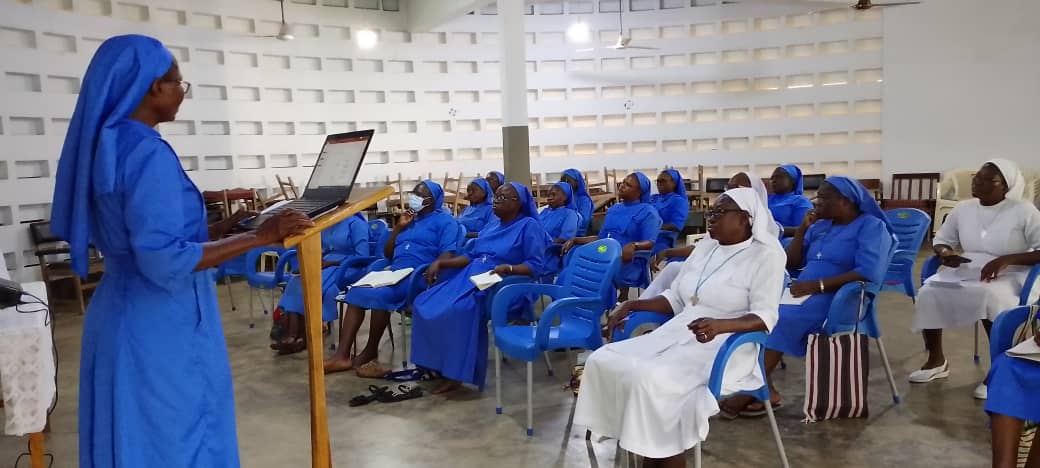
From September 21–22, 2026, thirteen Religious Sisters from various Congregations under the ASEC-HESA in Ghana participated in an orientation programme at the Catholic University of Ghana, Sunyani-Fiapre.
History and Core Values of ASEC
The morning session was facilitated by Sr. Martha Attakruh, SHCJ, who shared the origin of ASEC, founded in Pennsylvania in 1999, and the intrqoduction of HESA in 2013.

Both initiatives aim to support the academic advancement of African sisters. Sr. Martha emphasised that these educational opportunities are made possible through the generosity of donors and the modest contributions of dedicated Sisters.
Addressing academic integrity, Sr. Martha cautioned participants that plagiarism is a primary reason for the withdrawal of scholarship support, urging the sisters to avoid any form of academic misconduct.
She also reminded them never to underestimate small acts of kindness and to treat everyone they encounter with goodwill.
At the conclusion of her session, each participant received a laptop to support their studies.
Harmonizing Faith, Morals, and Academic Excellence
In addition to providing academic opportunities, the orientation guided participants on balancing faith, moral values, and effective study skills.

This session was facilitated by Sr. Dr. Maria Lydia Yaa Sarpong. Quoting St. Thomas Aquinas—who stated that “study is the search for truth”—she encouraged the sisters to view their academic pursuits as a true vocation.
Sr. Lydia explained that higher education for a Religious Sister is not merely an institutional requirement or a search for personal qualifications, but a divine calling rooted in service, truth, and integrity. Unlike the structured schedules of formation houses, university life requires sisters to independently manage their own timetables covering study, prayer, and rest.
On campus, Sisters serve as representatives of their religious communities, the Church, and society.
Citing St. Thomas Aquinas as the patron saint of students, Sr. Lydia highlighted his example as a humble learner who seamlessly integrated intellectual rigor with devotion to God.
She outlined three core pillars for academic success:
Faith as the Divine Foundation: Faith gives meaning to academic work; without it, the true essence of higher education is lost. Daily prayer and the sacraments nourish intellectual life and offer serenity and clarity during challenging times.
Academic study is a search for divine truth rather than a mere quest for high grades. Knowledge is not rote memorization (“chewing of books”) but it means reading and understanding. Knowledge should not lead to pride, but should equip sisters with evidence-based understanding to positively impact society.

Morals and Ethical Standards: Academic honesty is paramount. Sisters were urged to choose integrity over high grades, refraining from plagiarism, examination malpractice, and the improper use of Artificial Intelligence (AI) tools. Knowledge must cultivate humility, cardinal virtues, and solidarity rather than envy or unhealthy competition. When mistakes occur, sisters should humbly acknowledge them and seek reconciliation.
Effective Study Skills: Rooted in the teachings of St. Thomas Aquinas, academic work requires both intellectual rigor and humility. Sisters were encouraged to read attentively, evaluate evidence critically, and distinguish facts from opinions.
Emphasising the union of prayer and action (“Pray, Work, Trust, Serve”), Sr. Lydia reminded participants that prayer prepares the mind, but discipline executes the work. Sisters were advised to embrace their unique gifts, avoid unhealthy competition, and recognise that occasional setbacks serve to strengthen their character.

Conclusion
In her closing remarks, Sr. Lydia emphasised that academic pursuits become a Christian vocation when conducted with honesty, discipline, and devotion.
Maintaining a balanced personal schedule ensures that studies never compromise prayer or community life, nor should prayer be used as an excuse for a lack of academic preparation. When integrated thoughtfully, prayer and study serve as complementary aspects of the same divine calling.
By Sr. Veronica Ferkaa, SVI ( Catholic Sister Communicators Network Ghana- CASCON-GH)