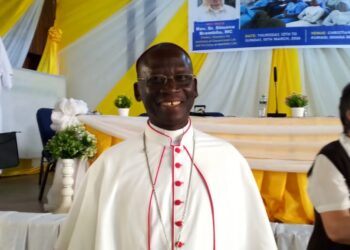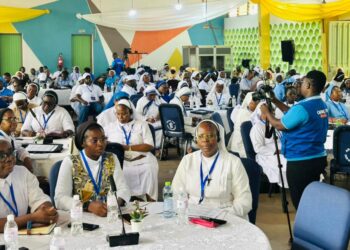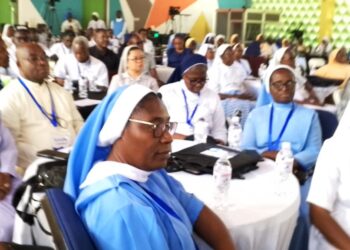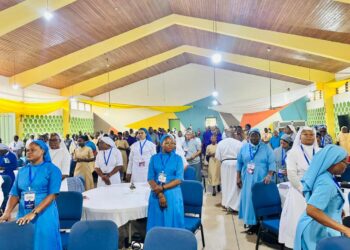



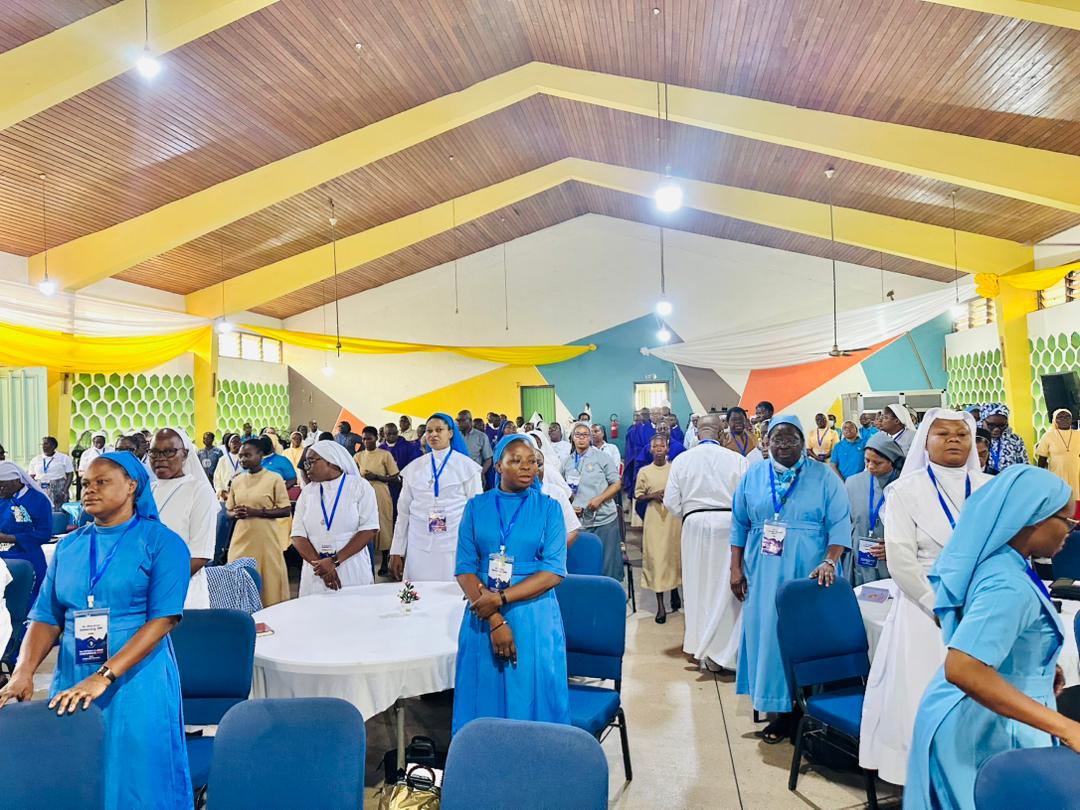
In a Homily during the March 14, 2026 Holy Mass celebrated at the Christian Village, Santasi – Kumasi in the Ashanti Region of Ghana, during the Regional Conference of Major Superiors of West Africa (RECOMSWA) and Africa Religious Union of Ghana (ARUG), the Most Rev. John Kobina Louis, an Auxiliary Bishop of the Archdiocese of Accra and Episcopal Chairman for the Clergy and Consecrated Life, admonished the Consecrated men and women to pray with humility and simplicity, and not perceive prayer as rehearsal of their achievements.
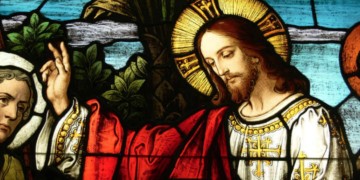
He based his reflection on the theme, “Prayer in the Life of Consecrated Men and Women,” alluding to the Prayer of the Pharisee, as opposed to that of the tax collector in the Gospel of Luke 18:9-14.
The prelate cautioned the Consecrated Persons, who by virtue of their calling are bound to pray frequently, not to pray like the Pharisee, who was rather out to pray to himself, rather than to God. They must avoid prayer that becomes a mirror in which they admire themselves, as was the case of the Pharisee.
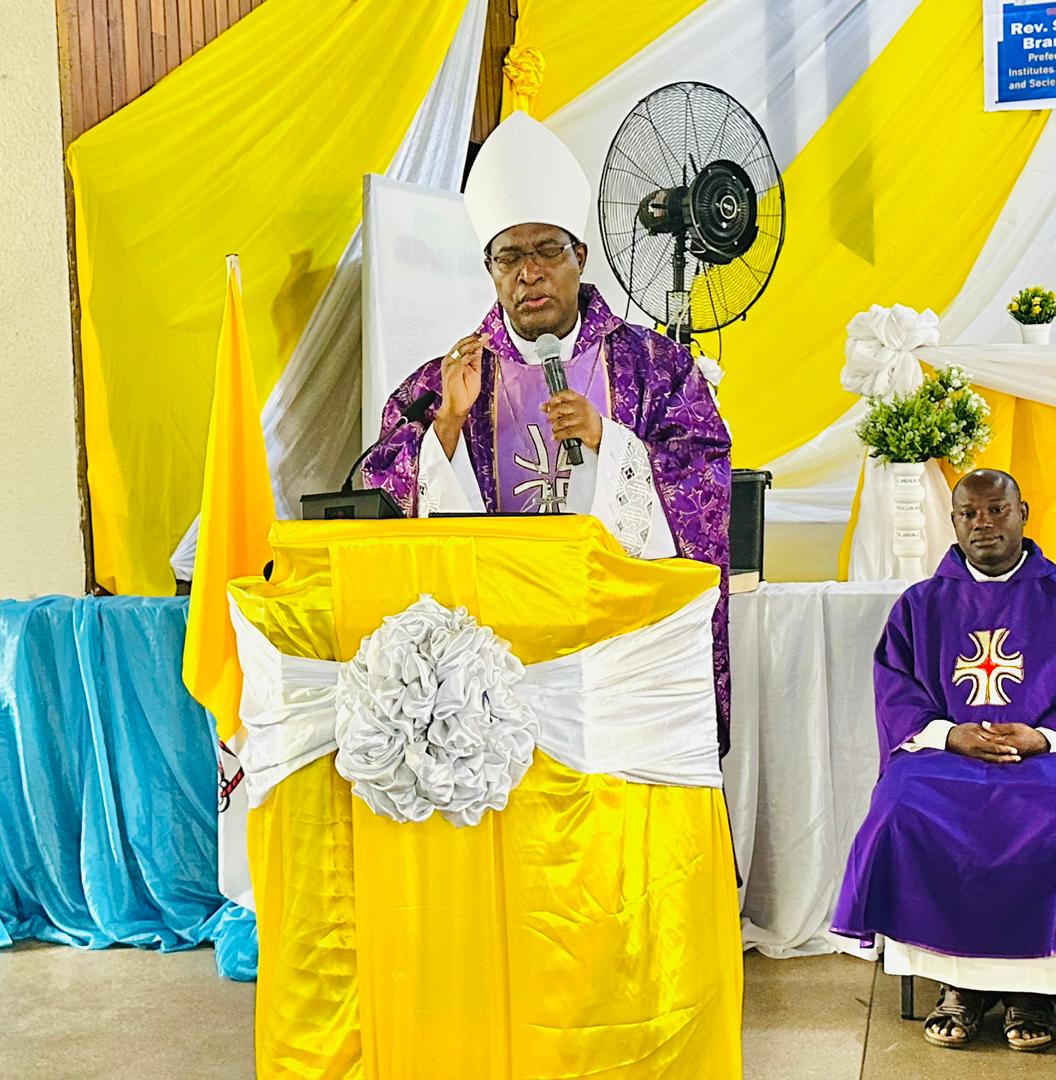


“When prayer becomes a rehearsal of our achievements, our ministries, our sacrifices, our fidelity, we risk losing the humility that makes prayer authentic,” he maintained.
To him, the Prayer of Consecrated Persons should be a window through which they may encounter God, and not merely external performances.
The Bishop further underpinned that God looks not primarily at external acts of religion, but more, at the heart of the one who prays, desiring a genuine and heart-to-heart relationship with Him, from which mercy and steadfast love flows.
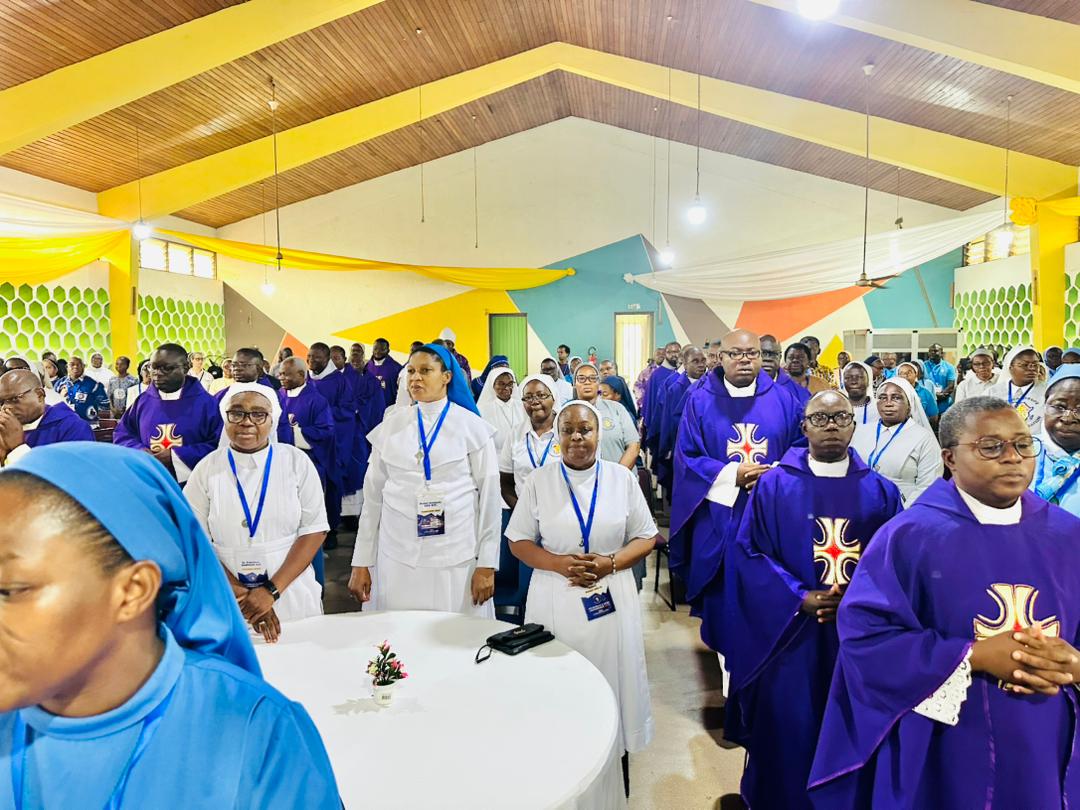
Making reference to the two people who appeared before the Lord in the Gospel, Bishop Louis underpinned that the difference between the two of them lies not in their location or posture in prayer, nor in the words they used, but rather in the disposition of their hearts: one goes there being mindful of his sinfulness while the other approaches God feeling righteous. “How can you stand before God with such posture,” he wondered.
The Episcopal Chair underpinned the importance of Prayer in the life of a Consecrated Person, noting that Prayer is “the life blood of Consecrated life,” and so must not be taken just like one of those routine activities. “Without prayer, the Consecrated life is Lifeless, without it our apostolate becomes activism, without prayer our community life becomes routine, the Vows become burdens instead of gifts,” he buttressed.
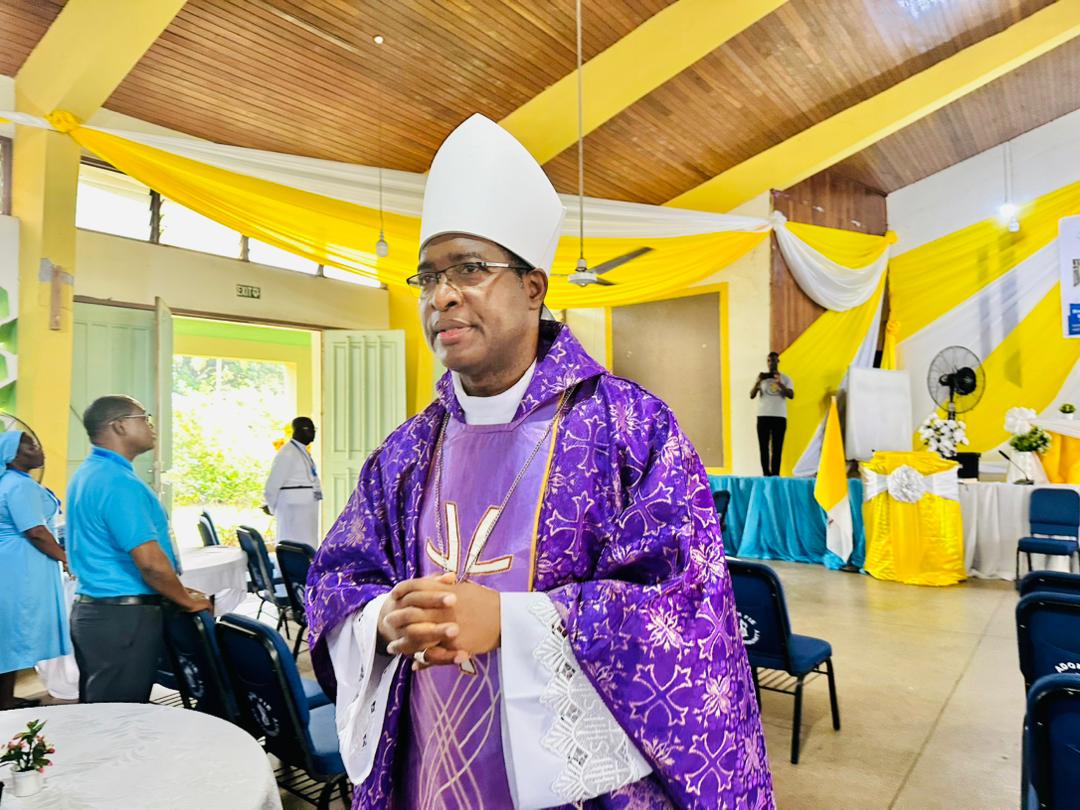
Alluding to the Prayer of the tax collector “Lord, be merciful to me, a sinner,” the Auxiliary Bishop opined that the Prayer of a Consecrated Person, should be “humbling, true, sincere and honest,” and the object of their Prayer must always be “the All Holy God”.
He further sustained that Prayer is filial communication with God, which could be compared with a healthy relationship between a child and a loving father, where trust is build.
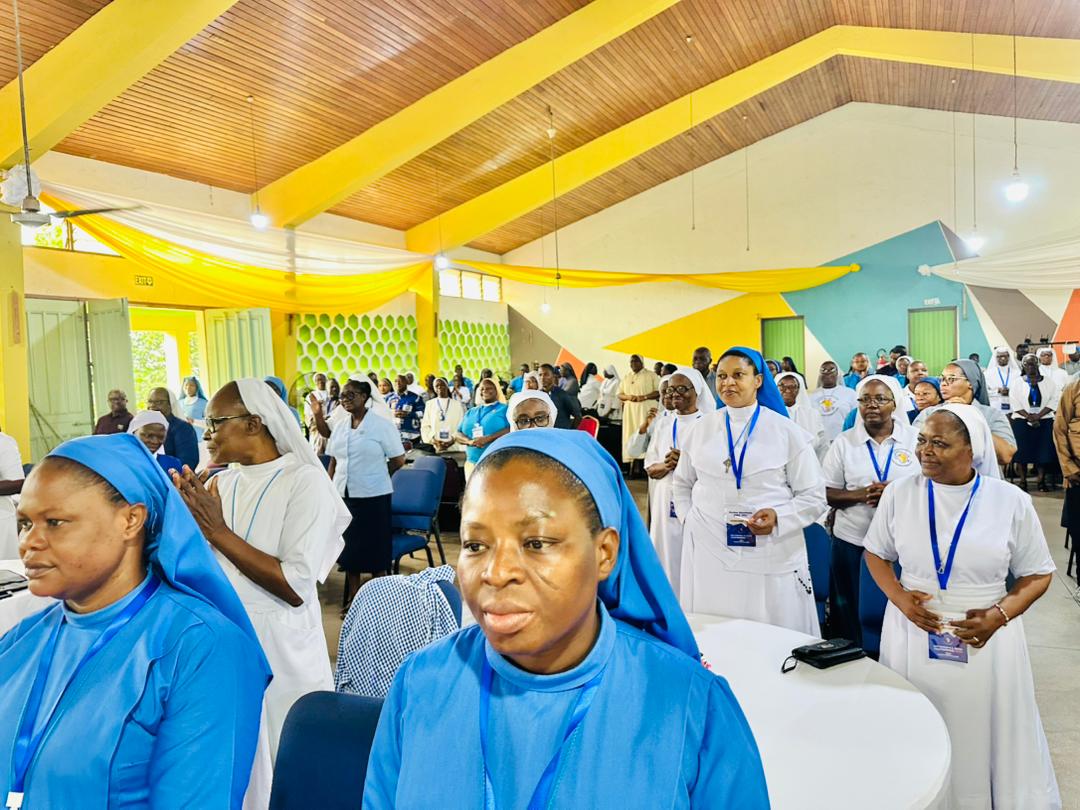
“If a child stops communicating with the father, the relationship weakens. In the same way, when we neglect prayer, our relationship with God suffers,” he noted, underlining that Consecrated Life is fundamentally a relationship of love with God, and prayer is that conversation that keeps the relationship alive.
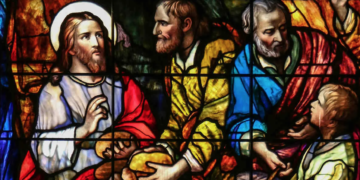
Drawing further inspiration from the parable of the repentant prodigal son, who returned to his father in all humility and simplicity, even opting to be treated as a servant in his own father’s house, the prelate encouraged the Consecrated men and women to pray with humility, trust, simplicity and sincerity, so that their Prayer becomes not just an obligation, but a living encounter with God, the loving Father.
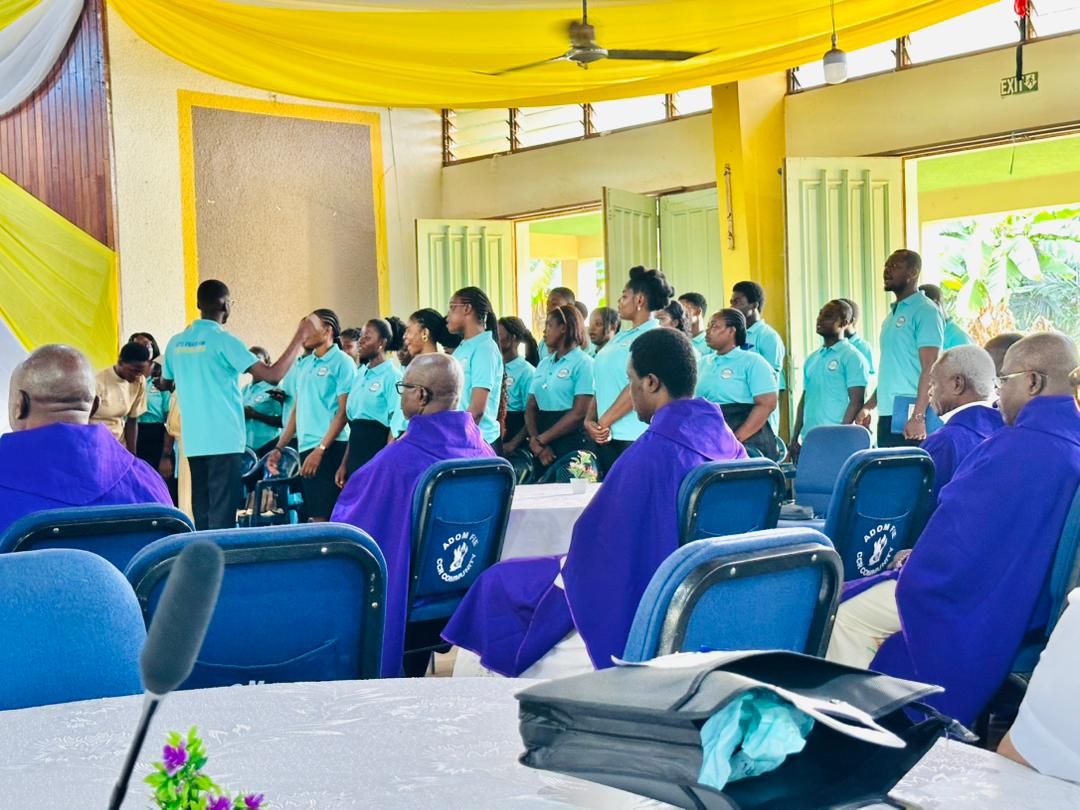
He prayed that the Prayers of the Consecrated People may resemble that of the Biblical tax collector: that of a trusting conversation of a child with a loving father, humble, simple, sincere and directed entirely towards God.
“As Consecrated men and women, called to serve the Church in West Africa, our ministries will bear fruits only if they flow from deep authentic prayer,” he reiterated.
By Sr. Agnes Mercy Nyatsoe, SMMC, Sr. Sheila Adombire, HHCJ, Sr. Sylvie Lum Cho, MSHR, and Sr. Gifty Anastasia Blewu, SMMC (Catholic Sister Communicators Network, Ghana – CASCON-GH)