
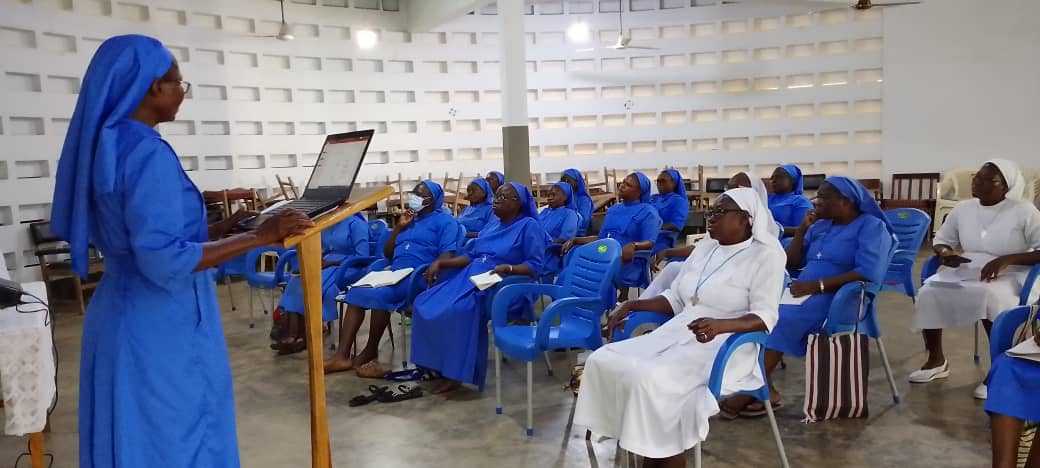
The Sisters of Mary Immaculate (SMI) organised a two-day workshop for Project Managers from June 26 to 27, 2026, at the SMI Mother House, Daffiama on the theme: Resource Mobilization in the Context of Religious Life.
The workshop attended by 23 Sisters is aimed to strengthen the participants’ knowledge and practical skills in resource mobilization while emphasising the ethical values and principles that guide resource mobilisation within Religious Life.
The training workshop encouraged participants to develop sustainable strategies for supporting the congregation’s apostolic works and projects.
The projects represented at the workshop included: St. Theresa Vocational Technical School – Daffiama (Upper West Region), Maarong Pognaa Guest House – Jirapa (Upper West Region), Morning Star Home – Kumasi (Ashanti Region), Mary Immaculate Home – Accra (Greater Accra Region), Mother of Mercy Guest House – Sunyani (Brong Ahafo).
The rest are Drug Store – Wa (Upper West Region), Host Bakery – Wa (Upper West Region), Media Centre – Wa (Upper West Region), Donald Richard Health Centre – Nakwabi (Savanna Region), Mother of Mercy Sewing Centre – Wa (Upper West Region), Mary Immaculate School – Wa (Upper West Region) and Oscar Morin Vocational Technical School- Ko (Upper West Region).
The facilitators of the workshop were Sr. Stephany Ayomah, SMI and Sr. Rose Dakurah, SMI who presented an overview of the workshop agenda and led the participants in a reflection focusing on stewardship, service, and responsible management of resources in Religious Life.
The facilitators defined resource mobilization as the process of identifying, securing, and managing the resources needed for the development, implementation, and sustainability of projects and programmes in order to achieve an organization’s mission.
Participants learned that resource mobilisation goes beyond fundraising. It includes mobilising financial, human, material, technological, and intellectual resources through partnerships, volunteerism, networking, and effective stewardship.
A major focus of the first day of the workshop was the moral and ethical dimension of resource mobilization during which the facilitators emphasized that Religious Congregations should uphold integrity, accountability, transparency, and respect for the values of the Church and the congregation when seeking support from individuals, organizations, and development partners.
The second day focused discussions on the ethical principles of resource mobilisation during which the facilitators highlighted the following key areas: Building and expanding relationships with individuals and organizations that share the congregation’s mission and values and understanding the different types of resources available: Financial resources, Human resources, Material resources, Technological resources, Intellectual resources.
The discussion also focused on avoiding desperation in accepting support from donors or organizations whose values or activities conflict with the mission and ethical standards of the congregation.
The facilitators further explained the importance of resource mobilisation in ensuring the sustainability of projects and institutions’ effective resource mobilisation which ensures the continuity of services provided to beneficiaries, promotes organizational sustainability, encourages diversified funding sources, ensures the availability of adequate financial resources and strengthens relationships with stakeholders and development partners.
Participants also explored practical strategies for maintaining donor relationships, improving organisational credibility, and planning for long-term sustainability.
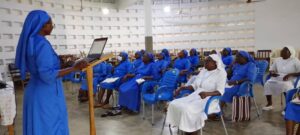
As part of the workshop, the participants were divided into groups to discuss practical resource mobilization challenges facing their various projects. Each group identified existing resources within their institutions, discussed challenges encountered in mobilizing resources, and proposed practical strategies for ensuring sustainability.
The discussions focused on identifying potential donors and partners who share the congregation’s mission, developing income-generating activities, strengthening stakeholder relationships through transparency and accountability, maximizing available human, material, and technological resources and preparing practical resource mobilisation plans for their respective projects.
Each group presented its findings. The presentations generated rich discussions and enabled participants to learn from one an other’s experiences across the congregation’s diverse ministries.
The two-day workshop successfully equipped the Project Managers with a deeper understanding of resource mobilization in the context of religious life.
Participants appreciated the practical and ethical approaches presented by the facilitators and recognised the importance of building sustainable projects through responsible stewardship, collaboration, transparency, and diversified resource mobilisation strategies.
The workshop concluded with a renewed commitment from all participants to apply the knowledge and skills acquired in strengthening their respective ministries and ensuring the long-term sustainability of the congregation’s apostolic works.
By Grace Ku-inne, SMI (Catholic Sister Communicators Network- Ghana- CASCON-GH)